Gallery
Institution

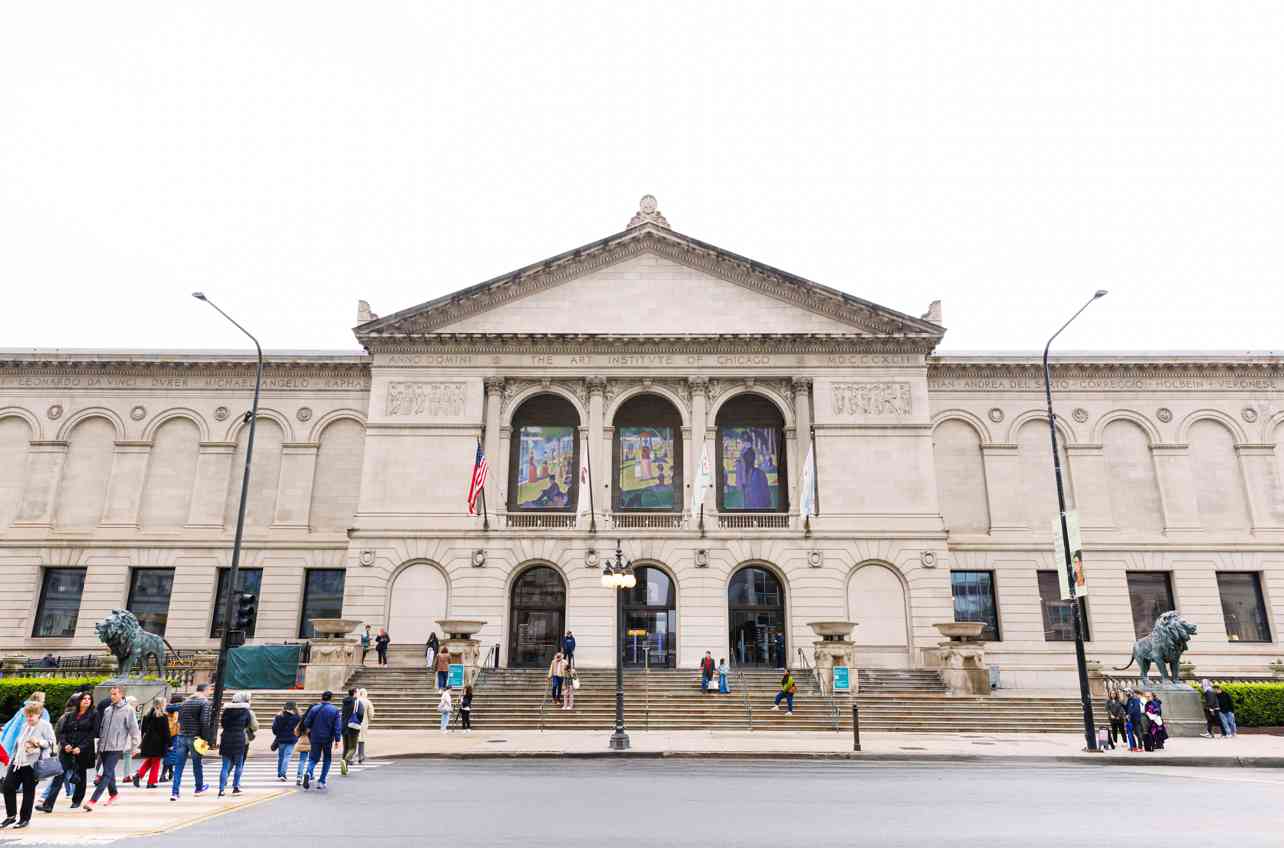
Art Institute of Chicago

Jill Mulleady: The Passenger. Image Credit: Jill Mulleady, Love Streams, 2026, Courtesy of the artist and Gladstone. Photography by Nicolas Brasseur.

Located in the heart of downtown, the Art Institute of Chicago is one of the world’s best art museums, home to a collection of art that spans centuries and the globe. Among the museum’s highlights are the largest collection of Impressionist paintings outside Paris; iconic works by celebrated American artists like Edward Hopper, Archibald Motley, Georgia O’Keeffe, and Grant Wood; and one of the finest international modern and contemporary collections of any panoramic art museum in the country.

Admission is always free for children under 14 and Chicago teens under 18; it’s also free for Illinois residents on Third Thursdays (including September 17) from 5:00 to 8:00 p.m.

About Art Institute of Chicago
Willem de Kooning Drawing

June 14 – September 20, 2026

The first major retrospective dedicated exclusively to Willem de Kooning's drawing practice, bringing together more than 200 works spanning seven decades — his first solo show at the Art Institute in more than fifty years.

Lee Miller: Fearless

August 29 – December 7, 2026

The first comprehensive survey of Miller’s photographs in more than 25 years showcases her singular career which included time as a fashion model, Surrealist innovator, magazine photographer, international adventurer, and battlefield correspondent.

Yayoi Kusama. Sun Spot (detail), 1953. The Art Institute of Chicago, gift of the Irving Stenn Jr. Drawings Collection in memory of Marcia Stenn.
Beyond Form: Abstraction at Midcentury

June 27 – October 19, 2026

Featuring 65 artists from more than 23 countries, this exhibition explores how abstraction emerged as a powerful visual language between 1940 and 1970, a period of global upheaval and transformation.

While abstraction allowed artists across the world to move beyond realism to convey complex emotions, ideas, and experiences, it was not a singular movement. There was no one reason artists turned to abstraction, no one abstract technique or style. The impulses, methods, and resulting artworks were wildly divergent.

Embroidered Traditions from Morocco to Afghanistan

May 2, 2026 – January 25, 2027

In the textiles of Southwest Asia and North Africa, embroidery is more than surface decoration.

In this region, known as SWANA, artists have used, and continue to use, centuries-old embellishment techniques to transmit cultural expressions of identity, status, and long-held belief systems. Cultural groups throughout the region wear layers of dress and adornment to protect their bodies physically and spiritually. Garments and household items are ornamented with valuable materials that function as wearable wealth, including symbolic motifs and designs constructed with coins, thread, beads, amulets, ornaments, and jewelry.
Mary Cassatt: After Impressionism

September 6, 2026 – January 3, 2027

Bringing together 70 paintings and works on paper made after her time with the French Impressionists, this exhibition showcases Mary Cassatt’s modernist breakthroughs as a painter, printmaker, and muralist at the height of her career.

Jill Mulleady: The Passenger

September 19, 2026 – January 18, 2027

The Passenger is a solo presentation by Jill Mulleady at the Art Institute of Chicago, opening September 19, 2026 — the Saturday of Chicago Exhibition Week — and running through January 18, 2027.

Abigail Lucien: Blood of the Earth

June 18, 2026 – January 25, 2027

In Blood of the Earth, Haitian American artist Abigail Lucien explores the ways that iron connects us to histories, the material world, and each other.

Lucien's artistic practice has long focused on iron—a mineral born from the explosion of stars that forms the molten core of the Earth and is essential to human life. Not only does iron course through our blood, but it also permeates the world around us—in everyday objects, technologies, and the built environment. Iron shape-shifts across terrestrial and celestial scales, and with this exhibition, Lucien probes its narrative and social potential.

On view
Events
Map
Included in Routes